
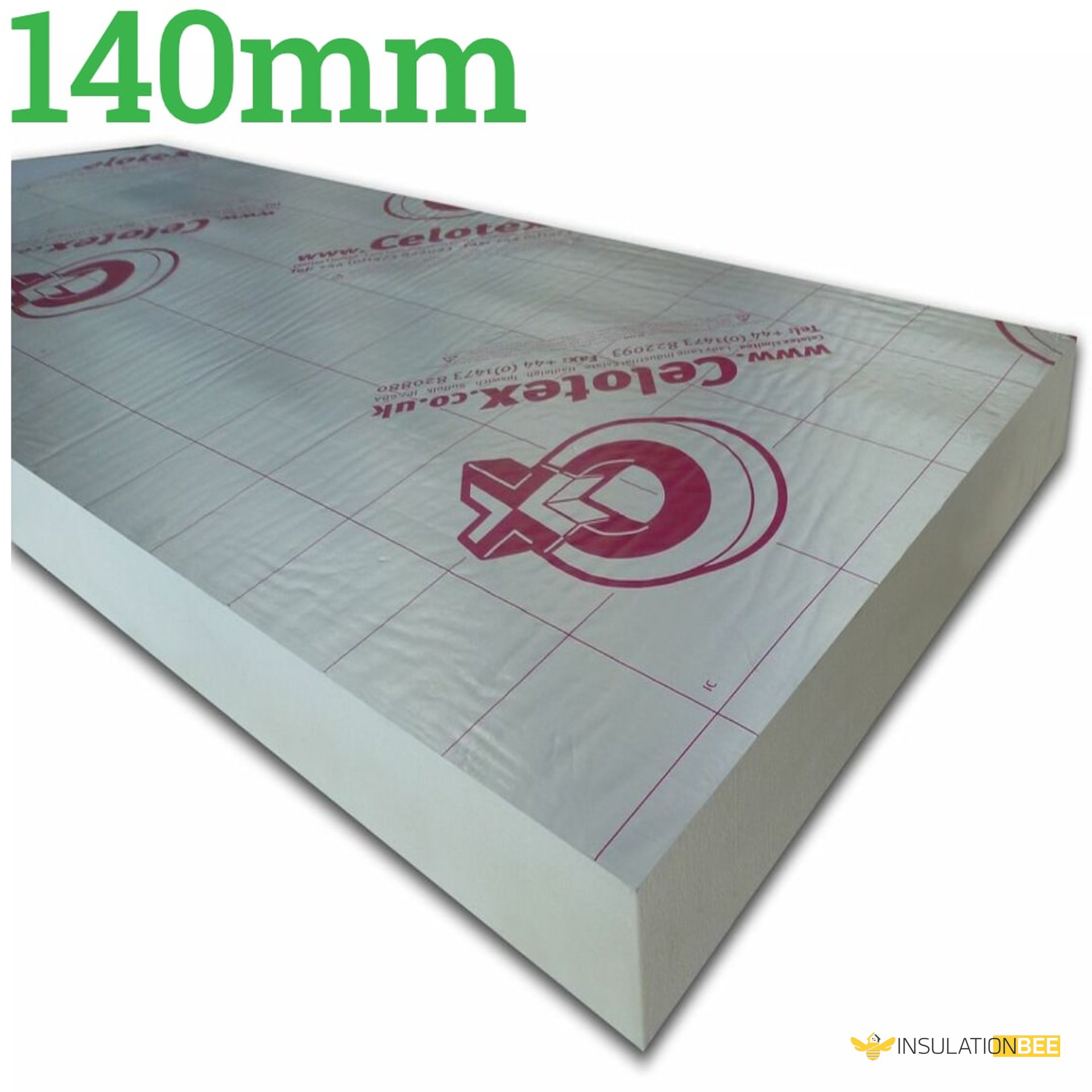
EcoTherm Eco-Versal 140mm PIR Insulation Board

We offer discounts on large quantities.
- Description
- Specification
- Download
- Q&A
- Reviews
- Description
- Specification
- Download
- Q&A
- Reviews
The 140mm EcoTherm Eco-Versal PIR delivers a versatile 5-in-1 solution with a rigid polyisocyanurate (PIR) core and aluminium foil composite facing on both sides, offering no fibre content.
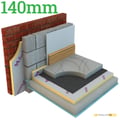
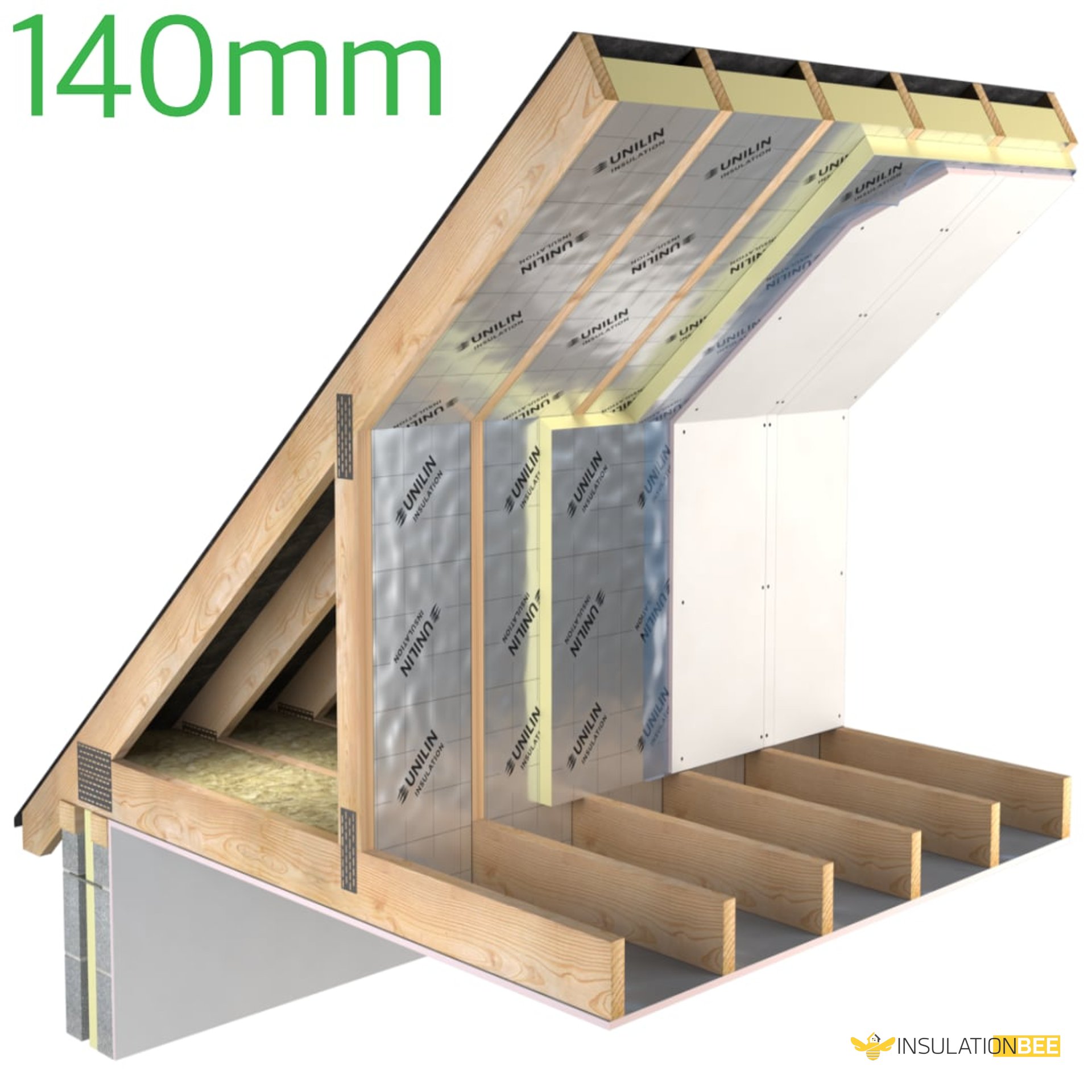
This PIR Insulation Board suits both new builds and thermal upgrades to existing structures, providing a cost-effective approach to reducing CO2 emissions whilst meeting Building Regulations and Standards. The 140mm thickness works across multiple applications including pitched roofs, floors, walls, dormer cheeks, and ceilings.
Properties
Manufacturer: EcoTherm®
Thickness: 140mm Insulation Board
Weight: 13.65kg
Length: 2400mm
Width: 1200mm
Dimensions: 2,400mm x 1,200mm x 140mm
Material: Polyisocyanurate (PIR)
R-Value: 6.36 m2K/W
Thermal Conductivity: 0.022 W/mk
Vapour Resistivity: 100 MNs/gm
Finish: Aluminium composite foil
Fire Rate: Euroclass F
Core: Fibre free rigid polyisocyanurate (PIR) insulant manufactured with a blowing agent that is CFC/HCFC free and has zero Ozone Depletion Potential (ODP) with a low Global Warming Potential (GWP)
Compressive Strength: 140 kPa when tested at 10% compression to BS EN 826: 2013
Applications: Roofs ǀ Walls ǀ Floors ǀ Ceilings
Features: General Purpose PIR Insulation Board
Applications
This 140mm product works well for new construction and thermal improvements to existing buildings. Suitable applications include:
- Floors
- Pitched roofs
- Cold flat roofs
- Timber frame walls
- Solid walls
- Dormer cheeks
- Ceilings
- Room-in-the-roof applications
For floors | Moisture tolerance guidelines for Eco-Versal are as follows:
- The 140mm ecotherm floor insulation should only be used above the Damp Proof Membrane (DPM). It should not be used in areas where it may come into contact with moisture from the ground.
- In applications where a concrete slab is specified or already exists, a protective membrane with a minimum thickness of 500 gauge must be laid over Eco-Versal before the screed is applied.
- Our 140mm Ecotherm PIR insulation is suitable for use with most Underfloor Heating Systems (UFH). However, a minimum 500 gauge polythene sheet must be laid over the 140mm Insulation Boards before the UFH system is installed. Please consult the UFH system manufacturer instructions when installing the UFH system.
For Walls | The guidelines for breathable membrane and vapour control when using 140mm ecotherm Wall insulation are as follows:
- A breathable membrane must be secured in line with the manufacturer's instructions.
- To mitigate the risk of condensation, a Vapour Control Layer (VCL) should be installed behind the plasterboard. However, this step may not be necessary if the plasterboard is an insulated plasterboard.
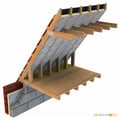
For Roofs | Guidelines for using breathable membrane, vapour control, vertical battens, and insulation layers with Eco-Versal are as follows:
- A Breathable Membrane should be fixed as per the manufacturer's instructions. For pitched roofs, the membrane should be laid over the rafters and secured using tile or slate laths.
- The need for a Vapour Control Layer (VCL) and/or undertile ventilation should be assessed according to BS 5250:2021 (Code of practice for control of condensation in buildings).
- In all over-rafter applications, 140mm ecotherm Roof Insulation should be fixed using vertical counter battens. This traditional method of fixing slate and tile laths is made possible by the counter battens.
- The breathable membrane should be laid directly on the 140mm Eco-Versal board before installing the counter battens. Alternatively, the counter battens can be installed on top of the 140mm PIR Board, and the breathable membrane draped over the battens.
- In cases where low U-values are required, installing insulation between the rafters and using an Insulated Plasterboard like Ecotherm Eco-Liner on the underside of the rafters may be more practical.
Info
Browse our Ecotherm range and filter by thickness or coverage on the left-hand side of the page. For advice on product suitability for your project or to request a quantity discount quotation, contact us by phone on +4402038839057, email sales@insulationbee or use Live Chat - Lowest UK Insulation Prices.
Related products


Extra Information
CRN: 11947867VAT N.GB323267322Trading since: 15-03-2019Privacy PolicyCookie PolicySite Map


